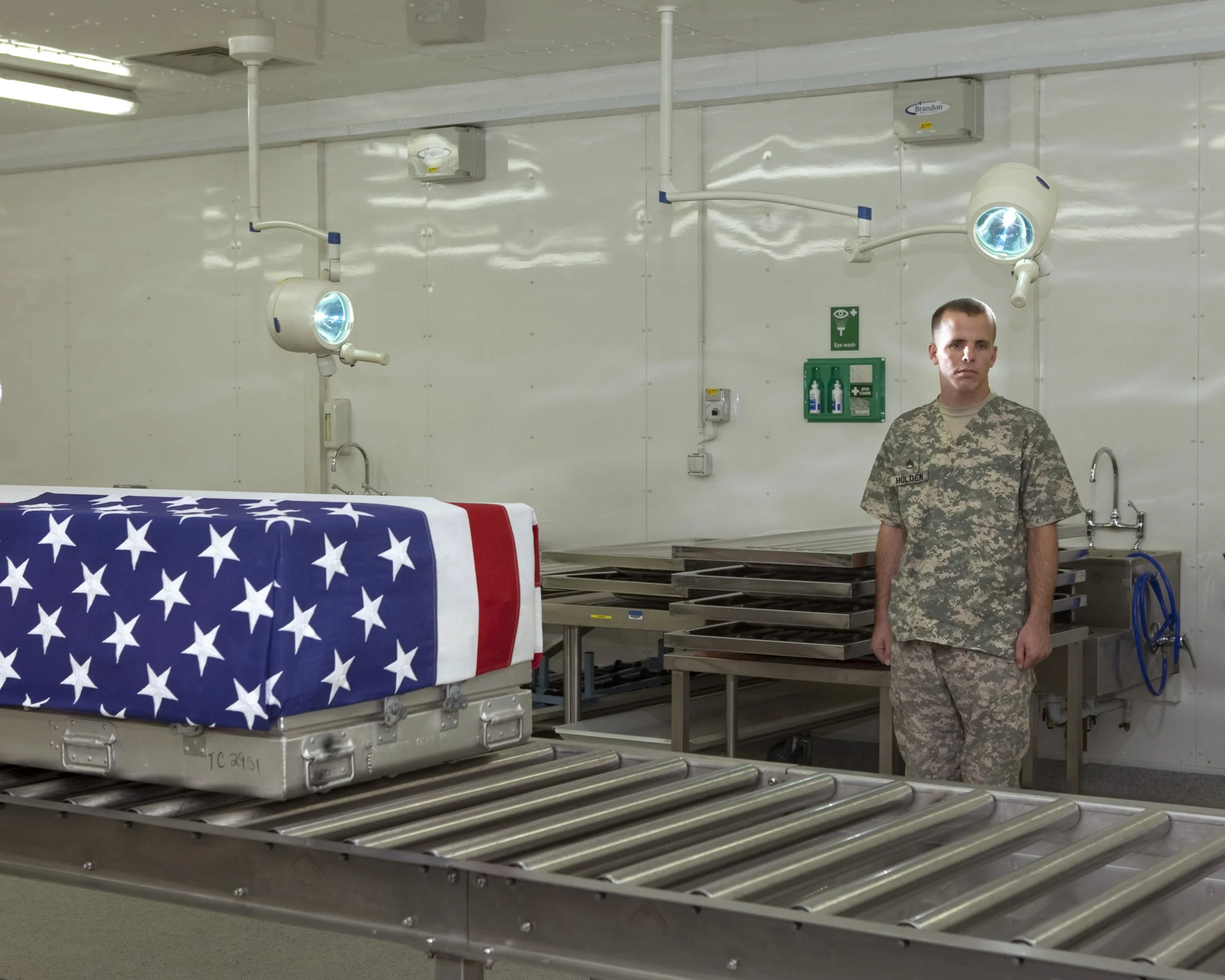
SSG Jeffrey Holden, 34, Mortuary Affairs Specialist “I want to let the families know that the soldiers were taken care of from the time of the incident to the return to the final resting place.”
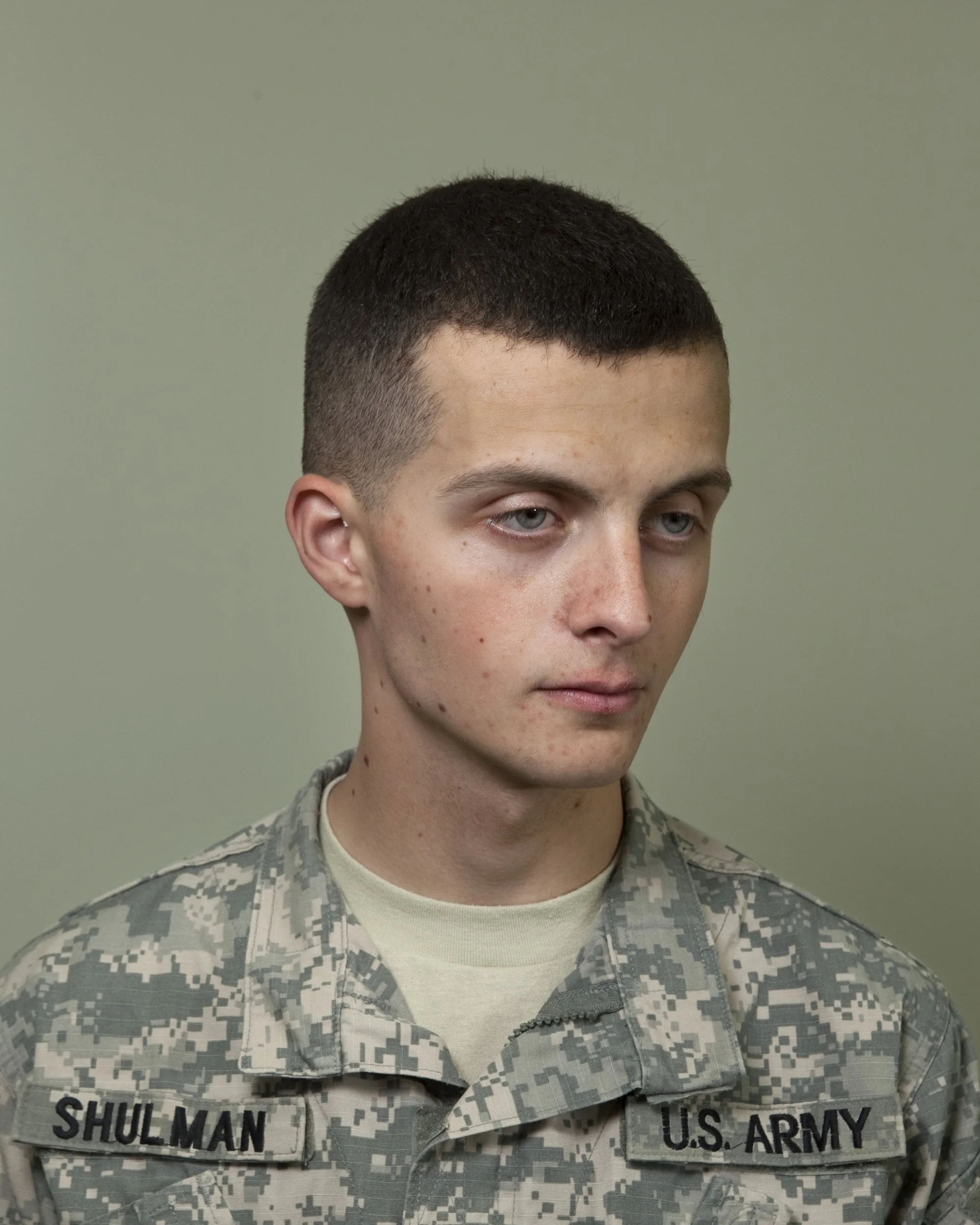
PV2 Ruslan Shulman, 20, Mortuary Affairs Specialist “I was a volunteer emergency medical technician as a civilian...Mortuary Affairs sounded like an interesting job and I get to know that the soldiers are getting back to their families.”
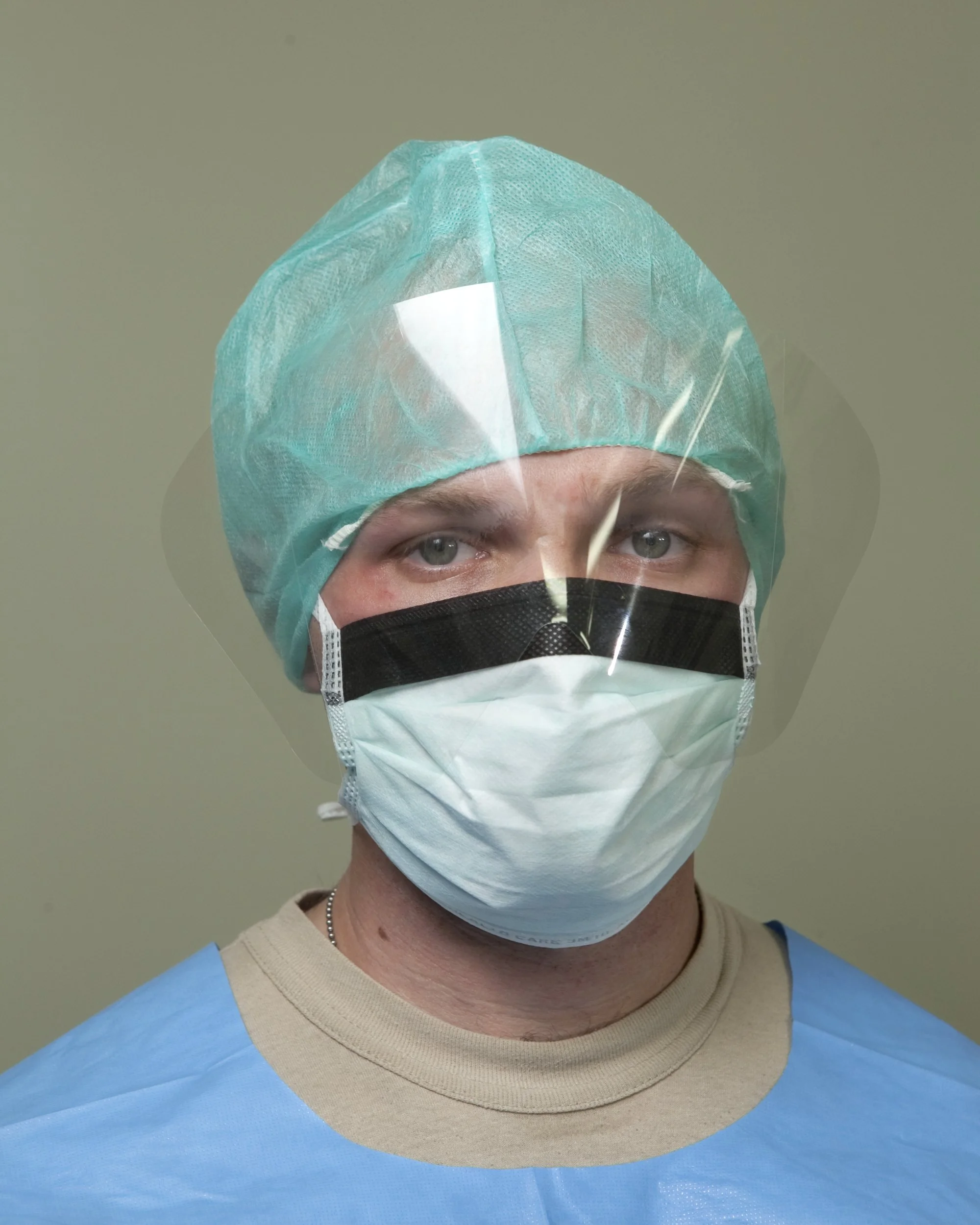
SPC Richard Hartley, Mortuary Affairs Specialist “I dealt with death at a close age, my friend died in front of me, he drowned and I had survivor's guilt from that. I didn't go back and get my friend, I'm not turning my back on the soldiers that have fallen...I'm making sure that they get home.”
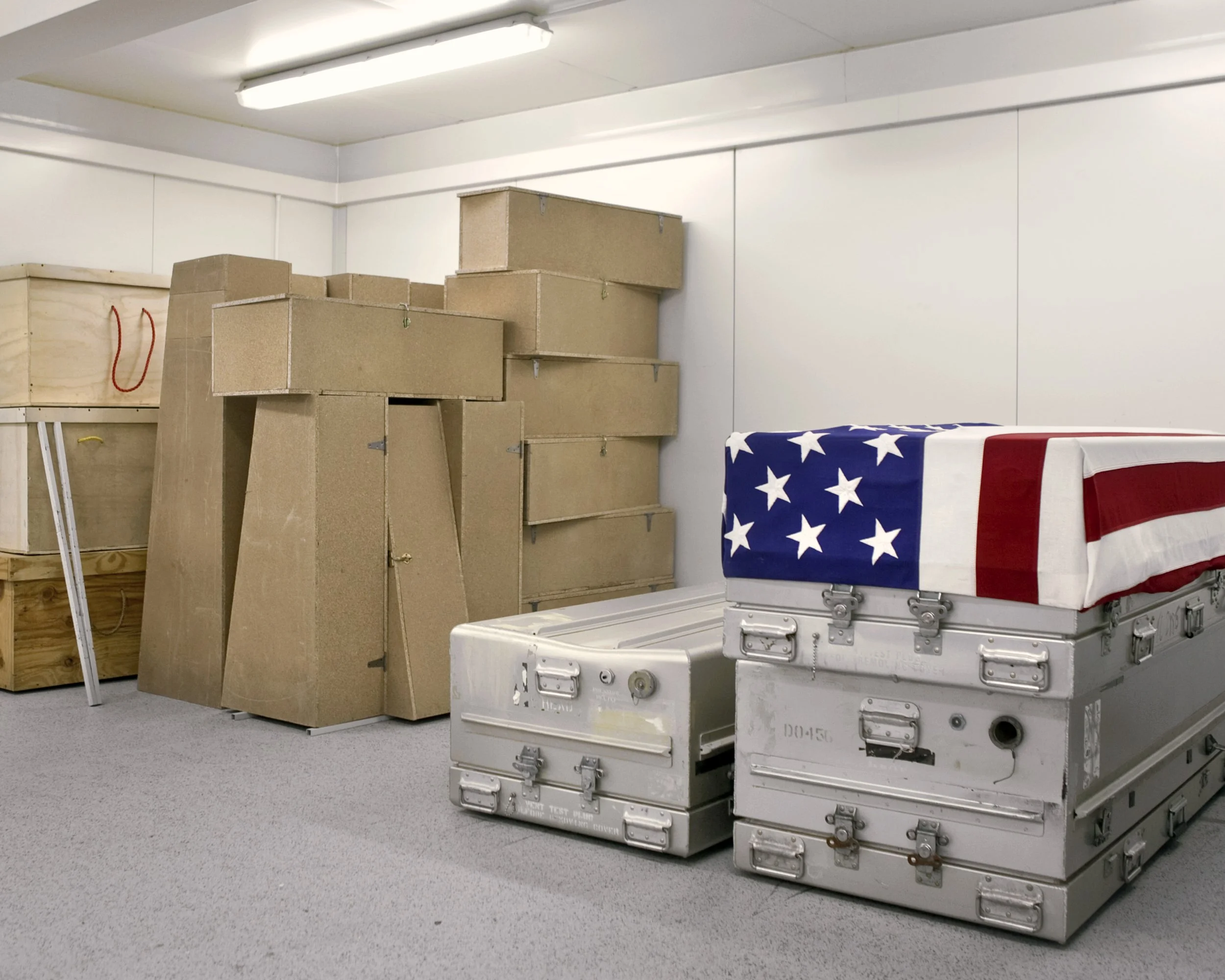
Stacked in a small room at the Mortuary Affairs Collection point in Kandahar are the transfer cases for civilian adults (left), children (centre) and soldiers (right).
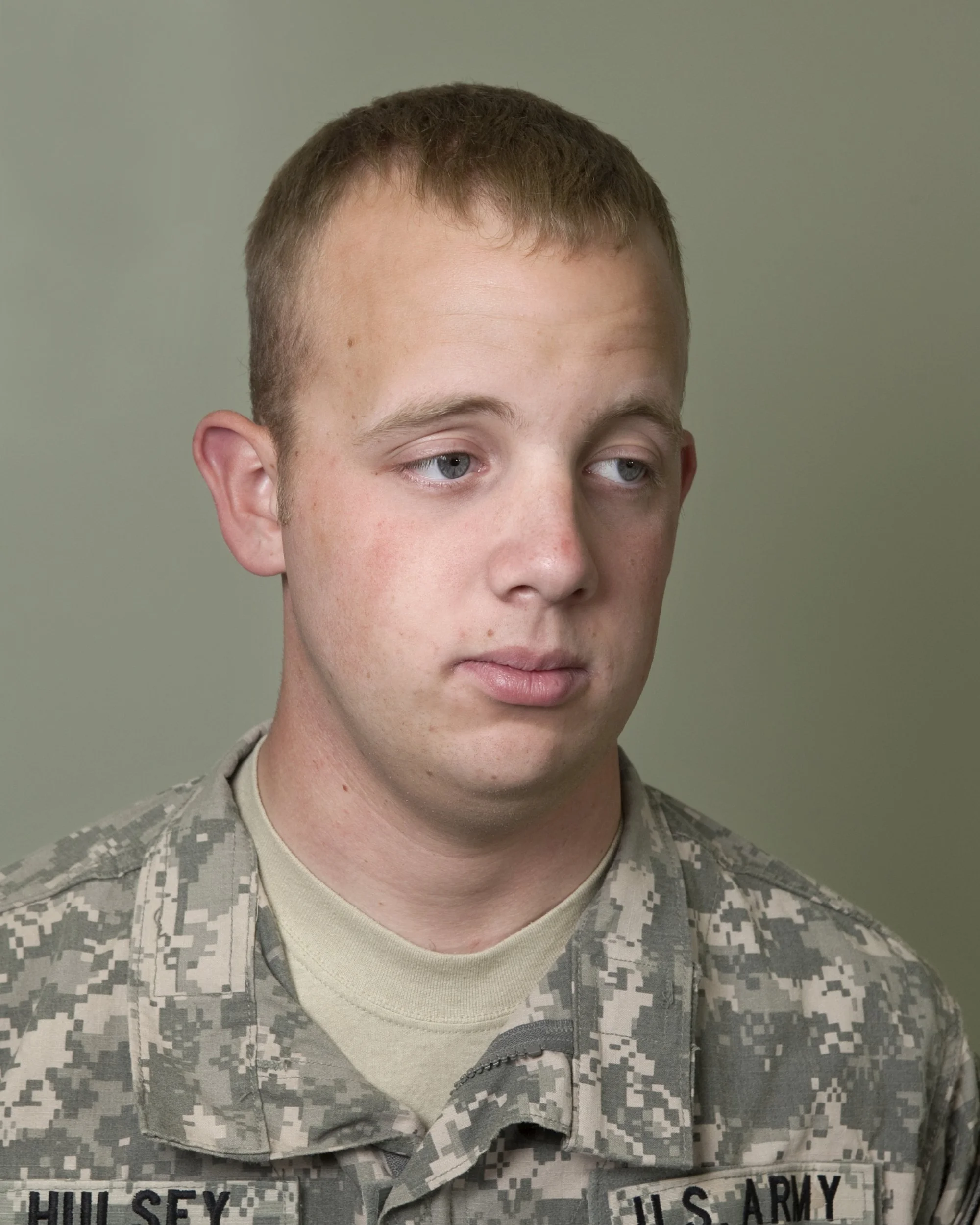
SPC Nicholas Hulsey, 20, Mortuary Affairs Specialist "I do it for the honor and dignity of the job, to give closure to their unit and families back home, to get them through their sorrow."
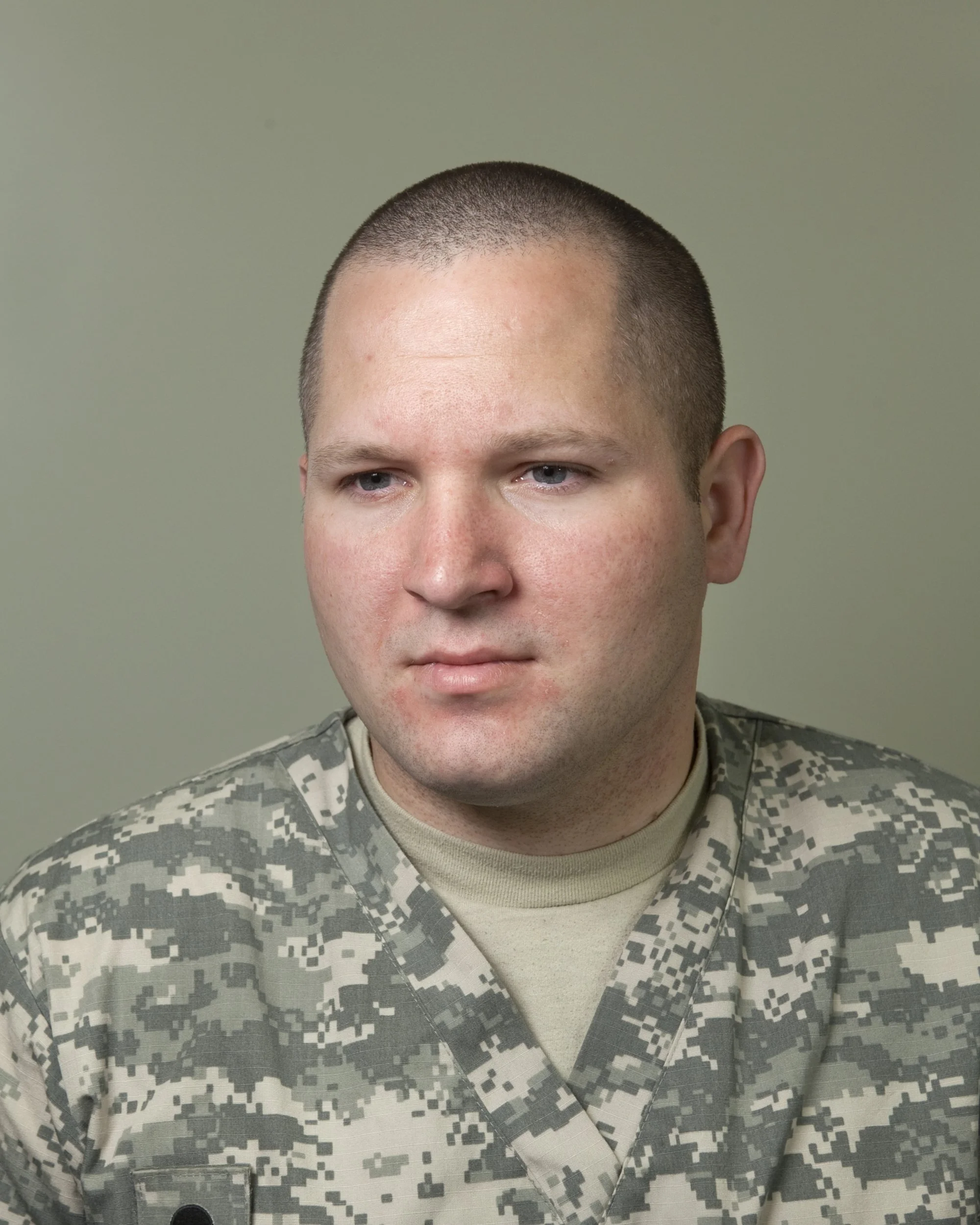
SPC Michael Young, 25, Mortuary Affairs Specialist "The most challenging part of the job is to separate yourself from the fact that another soldier was lost, and to be able to complete the mission and get them home to their loved ones."
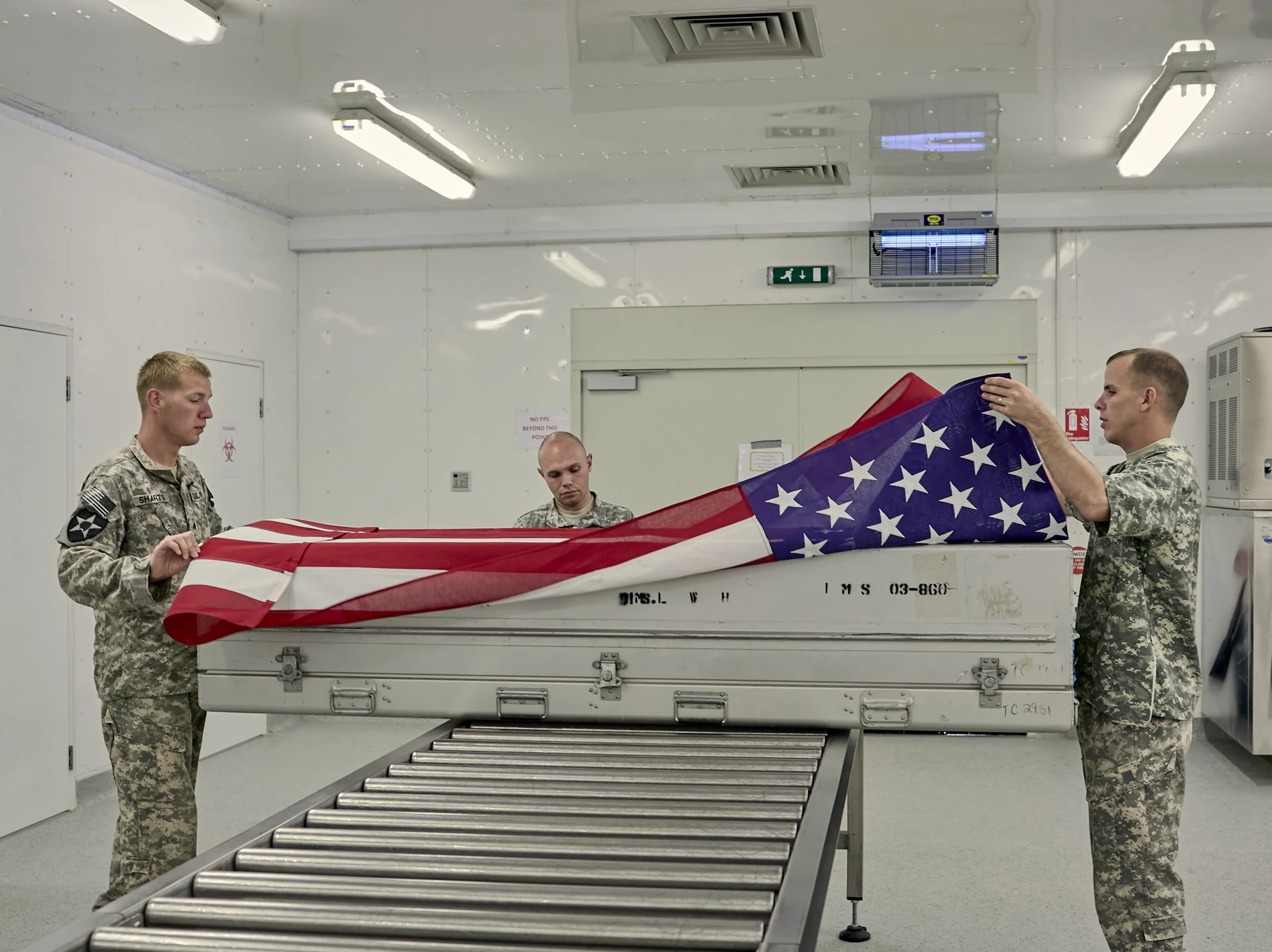
Mortuary Affairs soldiers practice covering a transfer case with an American flag. During a 24-hour span, the team can process up to 12 remains in the facility.
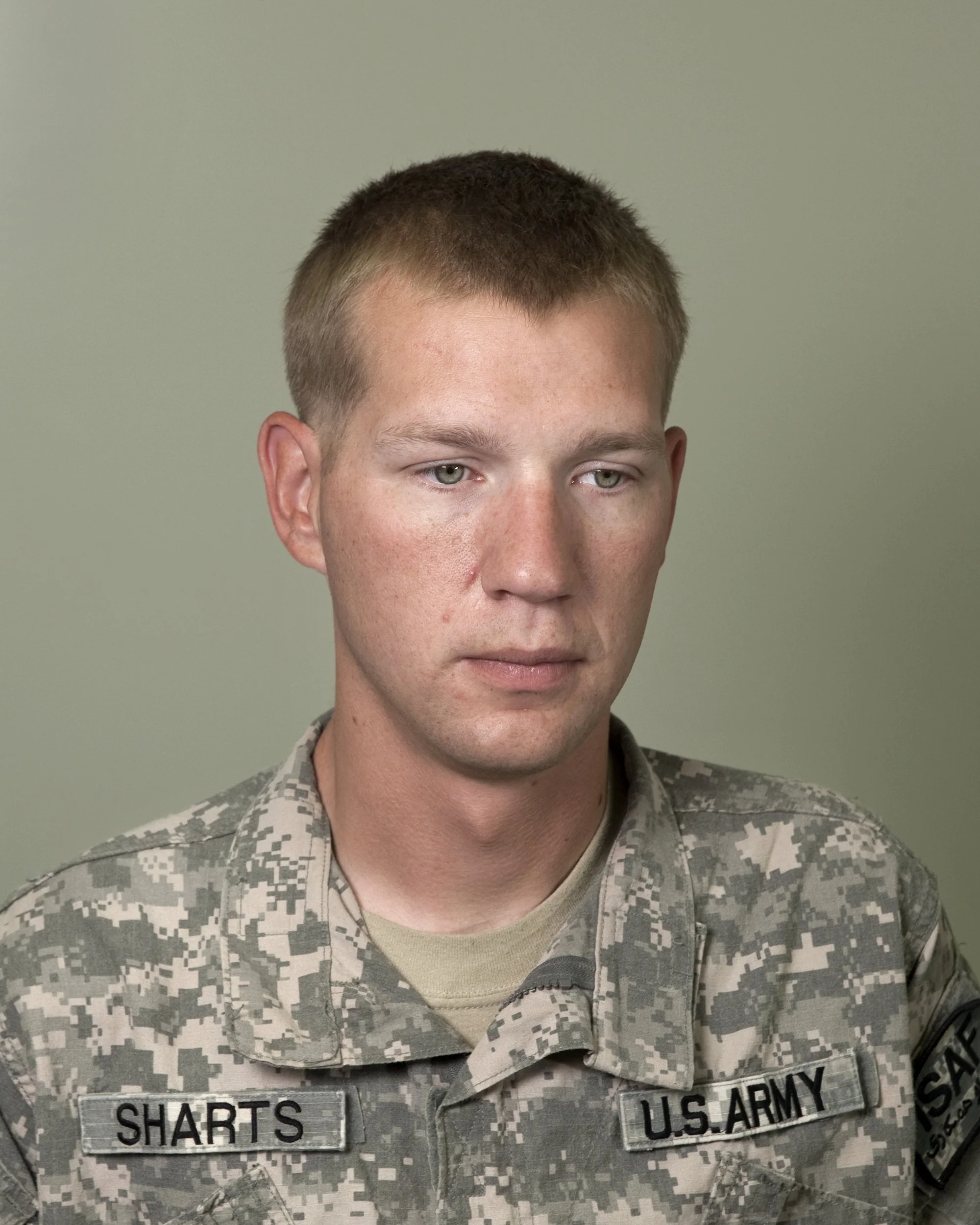
Sgt Joseph Shartz, 28, Mortuary Affairs Specialist "I chose to be in mortuary affairs so I could do something different and it seemed interesting. I like dealing with people, I like the people that come here. The most rewarding part of the job is that I'm helping people in the worst days of their lives."

Cpl Maurice Fowler. 28, Mortuary Affairs Specialist "The most challenging part is trying to do your job without letting your emotions take the best of you. Cause it is hard sometimes seeing people your age and they may have a family just like you do and always knowing that could have been you there, but I think it’s just handling the emotions."
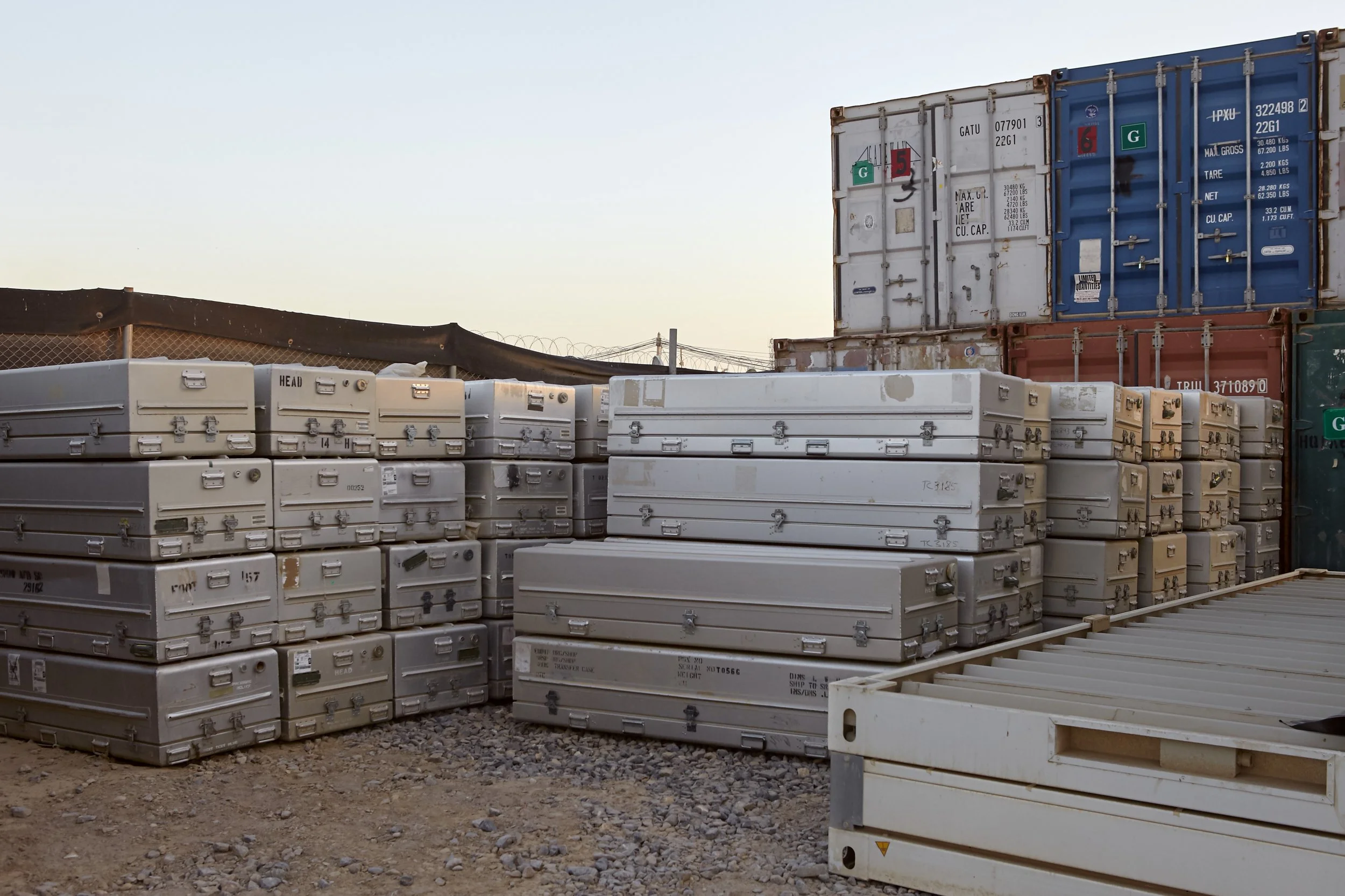
Transfer cases are stored outside of the mortuary affairs collection point at Kandahar Airfield in Afghanistan.
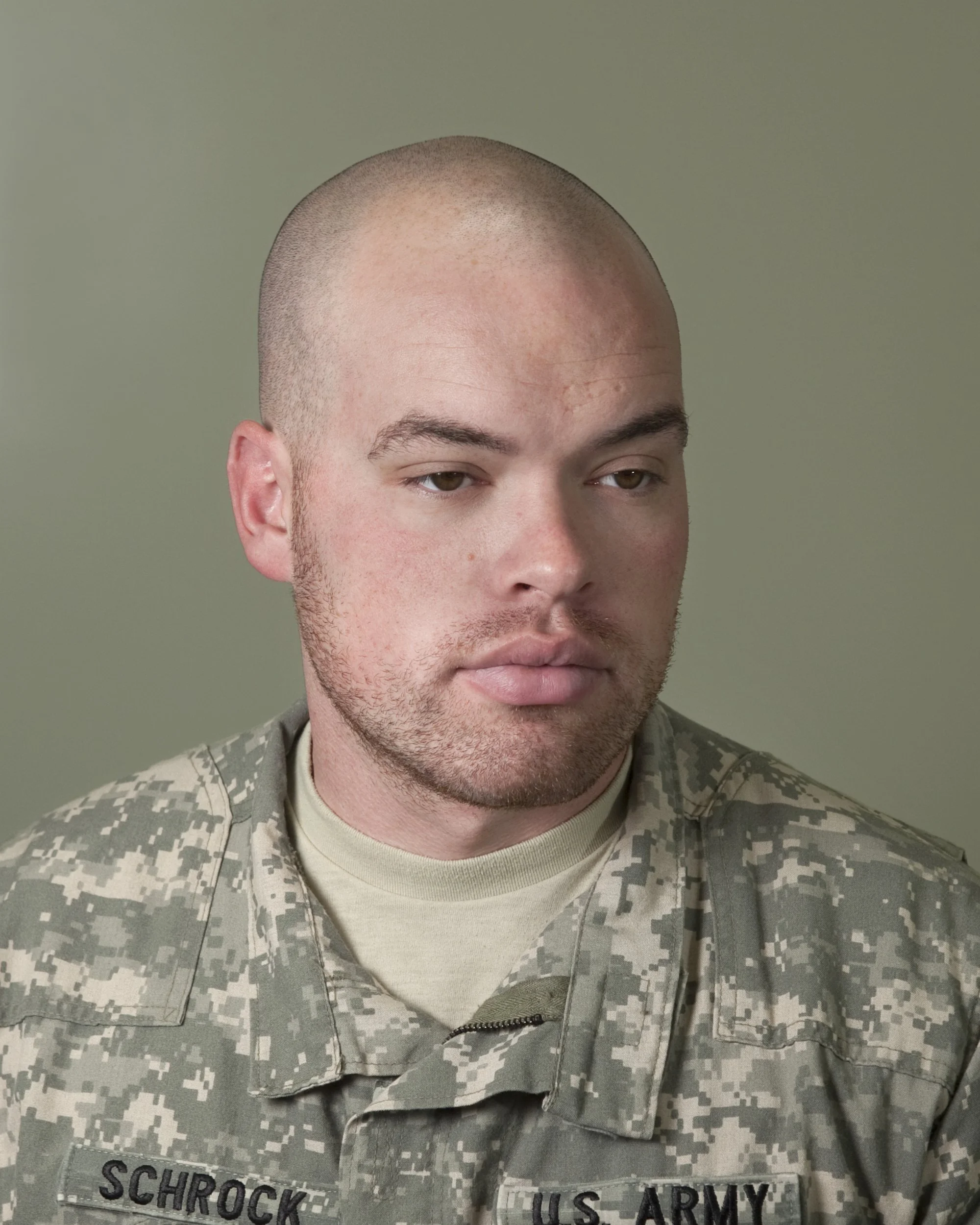
SPC Theodore Schrock, 25, Mortuary Affairs Specialist "The most rewarding part of the job is knowing that the families are able to have their soldiers returned home to them. The most challenging part of the job is being away from my daughter and fiance."
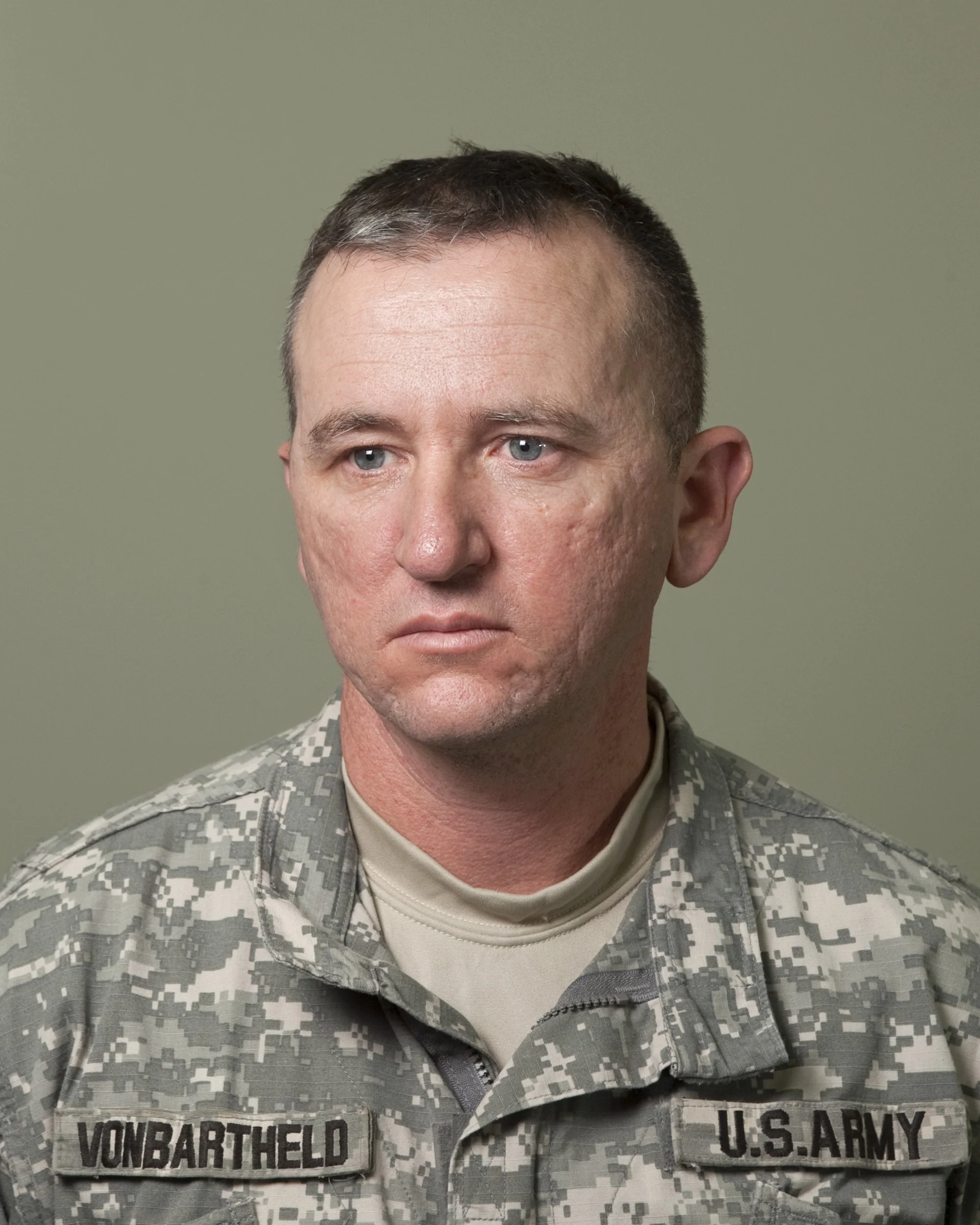
Maj Adam Vonbartheld, 45, Mortuary Affairs Officer “The most challenging part is the emotional side of it, knowing that these soldiers have paid the ultimate sacrifice and they have families back home, loved ones, parents, grandparents and children that they will never see again.”
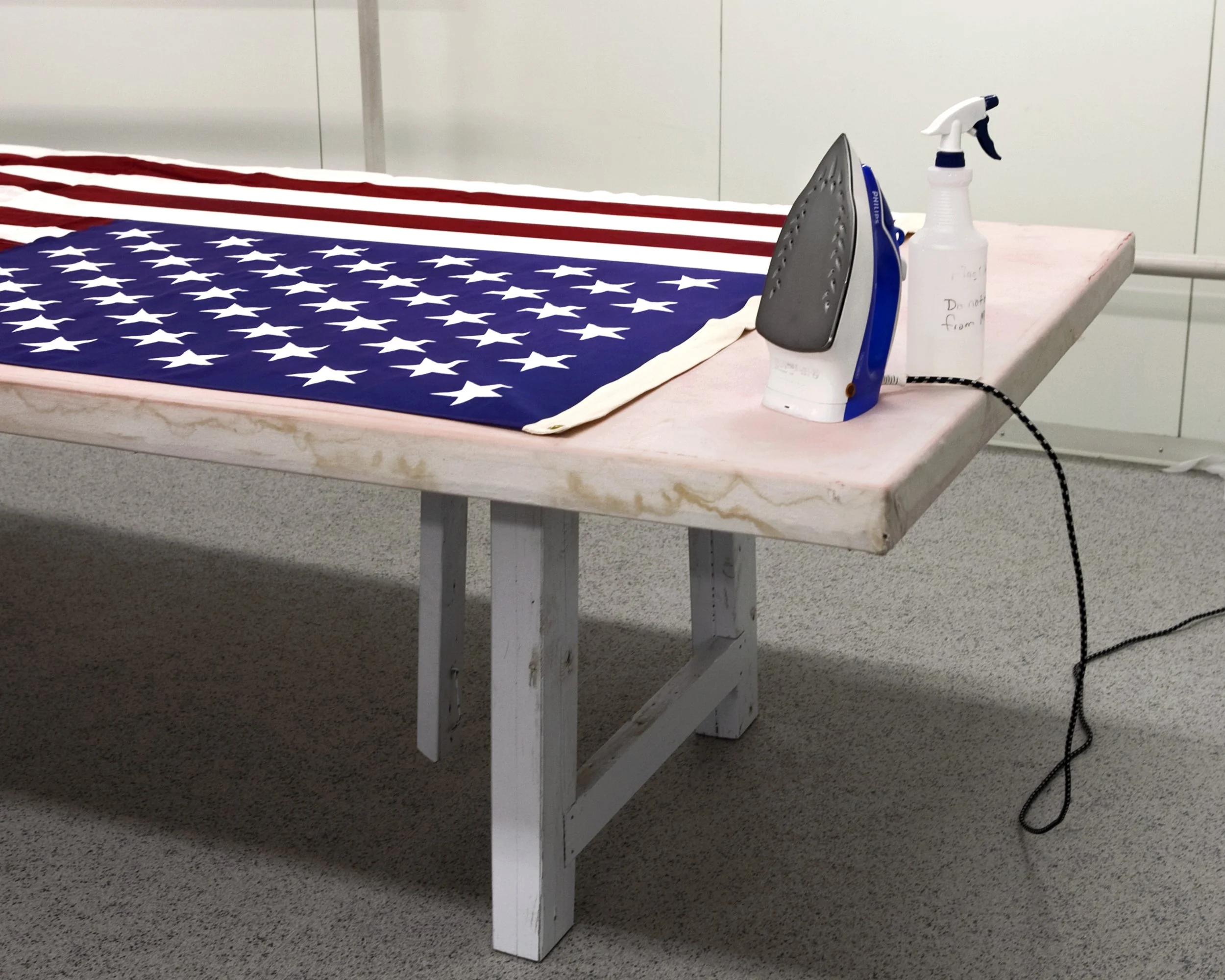
The American flag is always clean, and ironed when it is placed on the transfer case. Due to the psychological stress of the job, Mortuary Affairs soldiers have some of the highest rates of Post-Traumatic Stress Disorder. Because of this, they serve shorter tours, and rotate back home after six months.
Soldiers’ Angels - Mortuary Affairs in Afghanistan
Soldier’s Angels focuses on the labor of U.S. Army Mortuary Affairs soldiers in Kandahar, Afghanistan, centering on the unit responsible for receiving, preparing, and returning the war dead to their families. Working in a secluded area of Kandahar Airfield, these soldiers carry out the procedures that follow death in war with exacting care. Bodies are retrieved and identified, personal effects are documented, and transfer cases are prepared for their final journey home.
The series moves through portraits, interiors, and details of the mortuary environment, bringing attention to a form of military labor that is at once procedural and deeply felt. It turns away from combat and toward what follows it. In this space, duty is inseparable from grief, and the repetition of daily tasks becomes a way of preserving dignity for the dead. Each transfer case points to an individual life cut short, and to the family waiting on the other end of that process.
At its center, Soldier’s Angels is concerned with the systems through which war manages loss. Mortuary Affairs appears here not as a marginal function of military life, but as a place where care, ritual, and emotional strain become part of service itself. The photographs bring into view the burden of serving the dead while living in the shadow of ongoing violence.