
Weapon Maintenance, Kandahar Airfield

New Year's Eve, Kandahar Airfield
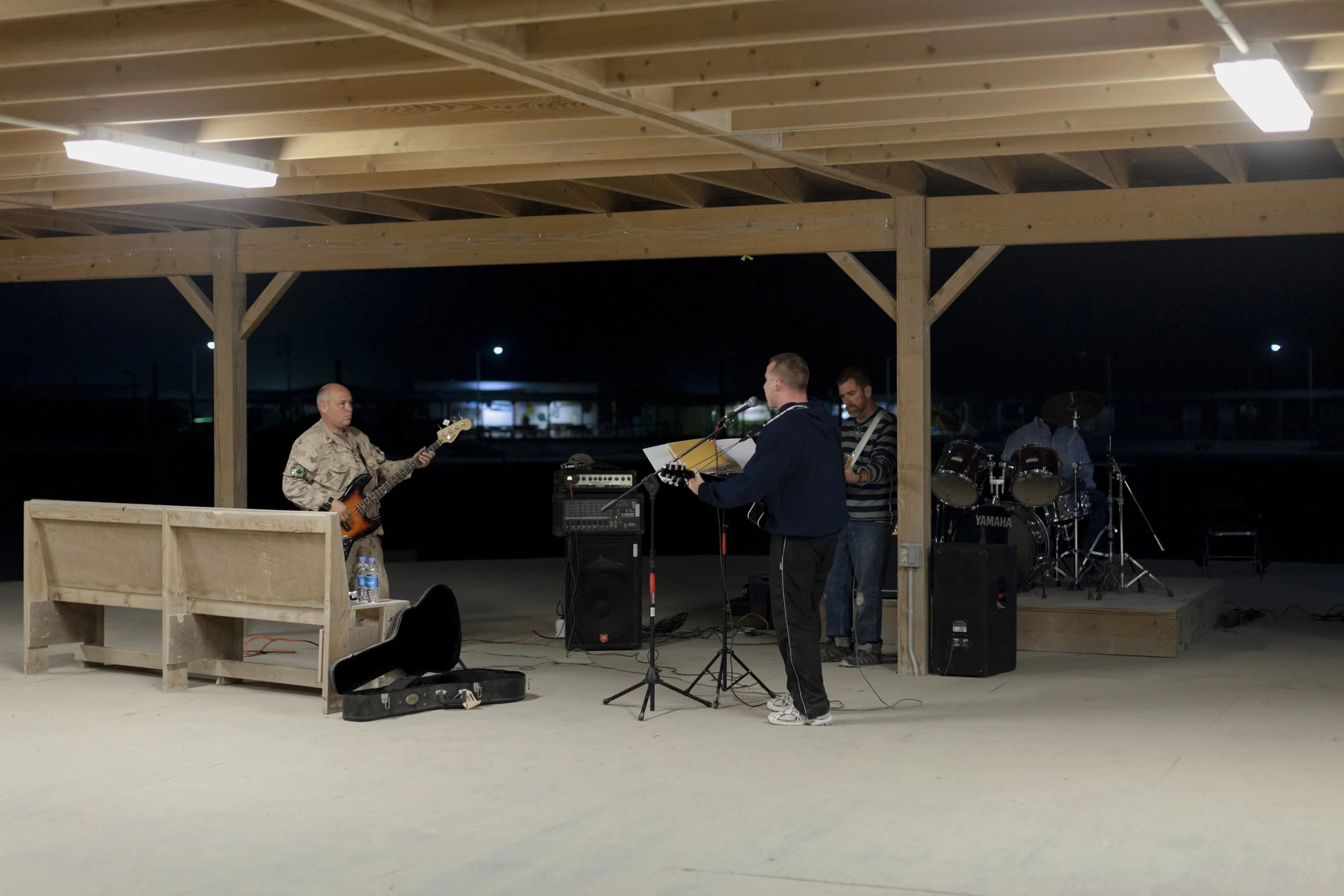
Band practice at the Boardwalk, Kandahar Airfield

Subway Kandahar, Kandahar Airfield

Sick parade, Kandahar Regional Medical Hospital
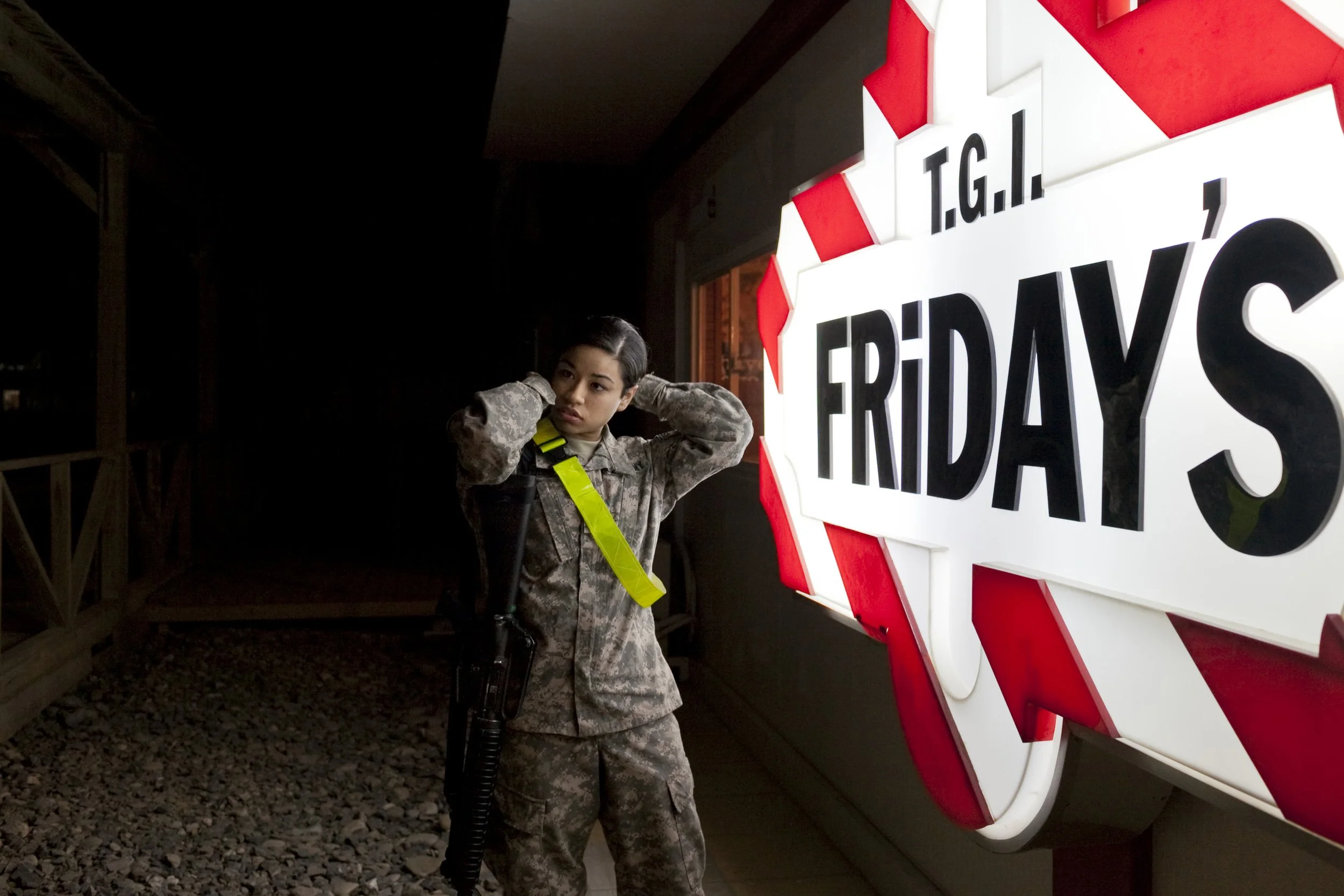
T.G.I. Friday's, Kandahar Airfield

Chapel, Kandahar Airfield

Administration, Kandahar Airfield

Afghan interpreter, T.G.I. Fridays, Kandahar Airfield

Dental cleaning, Kandahar Airfield

Bulletin board, Kandahar Airfield

Cashier, Kandahar Airfield

American flag, Kandahar Airfield

A knockoff "Hard Rock Cafe Afghanistan" coffee mug sold in a gift shop at "The Boardwalk", the social center of Kandahar Airfield which offers Western style cafes, gift shops, restaurants and sports fields.

A "Taliban Hunting Club" T-shirt sold in a gift shop at "The Boardwalk", the social center of Kandahar Airfield, which offers Western style cafes, gift shops, restaurants and sports fields. The shirt has become popular with soldiers on the front line and their supporters back home.

Shrapnel from a rocket-propelled grenade fired by the Taliban at coalition troops during Operation Medusa in Kandahar province in 2006. At the time, it was the most significant land battle ever undertaken by NATO.

Safe Conduct Passes are typically airdropped by Psychological Operations units into populated areas prior to a military operation.

Tim Hortons camouflage cap - a highly coveted souvenir by soldiers and contractors serving at Kandahar Airfield. Since opening in Kandahar Airfield in 2006, the popular Canadian coffee shop, Tim Hortons has served four million cups of coffee, three million donuts and half a million iced cappuccinos and bagels to 2.5 million customers. After five years of serving customers from 37 different nationalities, the Tim Hortons outlet in Afghanistan closed in 2011.

A "Major League Infidel" velcro patch that replicates the Major League Baseball logo was sold in a gift shop at "The Boardwalk", the social center of Kandahar Airfield, which offers Western style cafe's, gift shops, restaurants and sports fields. The patch is often worn on a soldiers sleeve or body armour on the battlefield.

A Soviet-era pistol holster found on a Taliban position during Operation Medusa in Kandahar province in 2006. At the time, it was the most significant land battle ever undertaken by NATO.
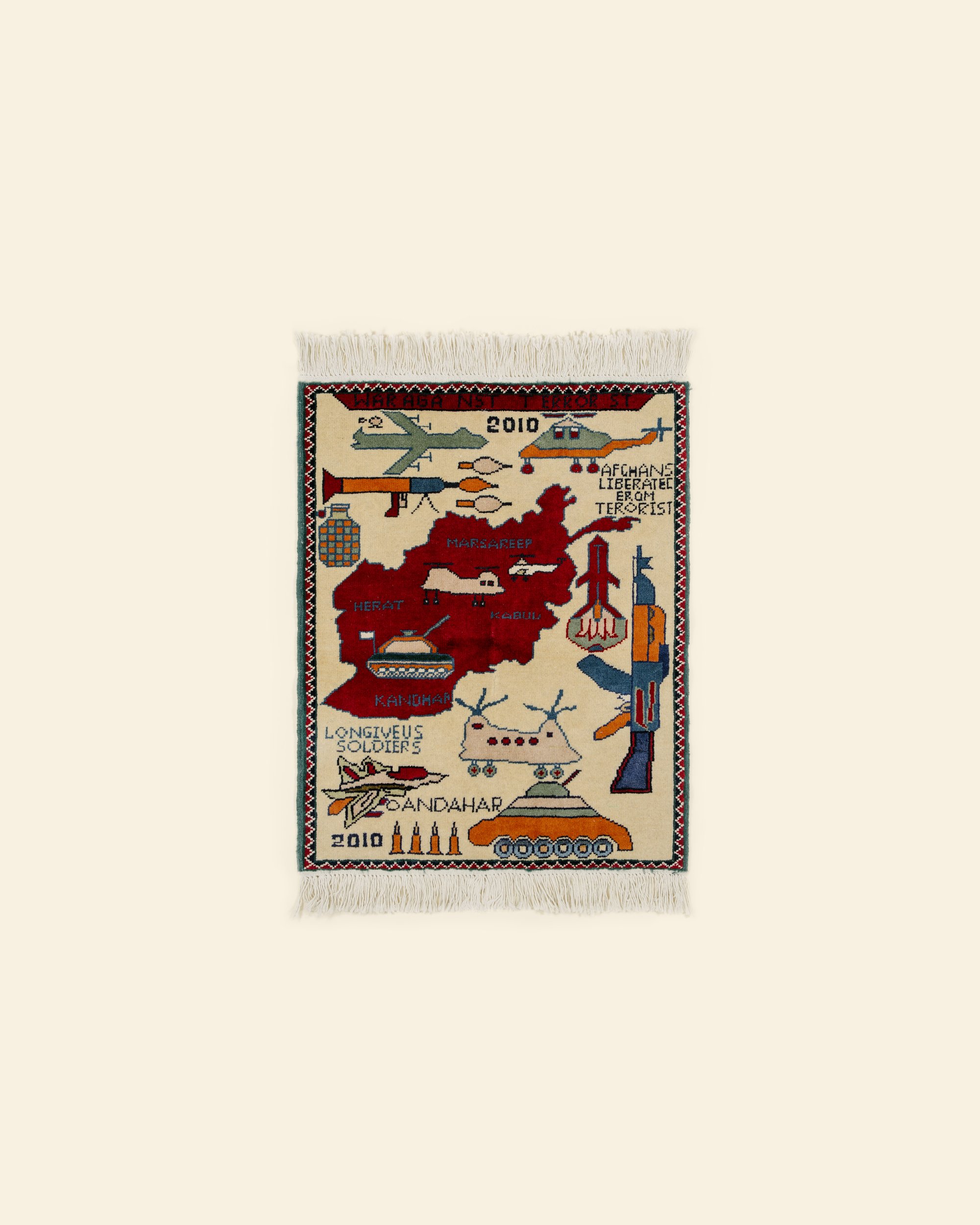
A handmade Afghanistan war rug sold at Kandahar Airfield's weekly bazaar. The bazaar was introduced so coalition troops could shop from local traders within the safety of the base, and to provide a small cash injection to the local economy. The vendors sold many items, from counterfeit DVD's, jewelry, daggers, traditional clothing to crafts.

Operation Enduring Freedom Afghanistan Challenge Coin. A military challenge coin usually bears a unit or organization’s insignia and/or the title of a military operation. The use of challenge coins in the military is nuanced. Challenge coins are typically presented by unit commanders in acknowledgement of special accomplishment, or to prove membership in a particular unit or to those who had served as a part of a military operation.

"Afghanistan Rod & Gun Club - It’s better to give than to receive" T-shirt sold in a gift shop at "The Boardwalk", the social center of Kandahar Airfield, which offers Western style cafes, gift shops, restaurants and sports fields. The shirt has become popular with soldiers on the front line and their supporters back home.

A letter sent to a soldier in Afghanistan as a part of a care package. During the holiday season, the Army postal operations in Southern Afghanistan receives packages and letters that average between 70,000-125,000 pounds a day.

A "Laser Guided Democracy" velcro patch that was sold in a gift shop at "The Boardwalk", the social center of Kandahar Airfield, which offers Western style cafe's, gift shops, restaurants and sports fields. The patch is often worn on a soldiers sleeve or body armour on the battlefield.
The Thing About Remembering
The Thing About Remembering grew out of time spent on Kandahar Airfield between 2008 and 2010, where I became interested in the ordinary systems that sustain war. Rather than follow combat directly, the work remains on the base, moving through offices, medical rooms, service spaces, and places meant for rest. Kandahar appears less as a battlefield than as a self-contained environment, shaped by routine and by the structures required to keep military life in motion.
The series brings together portraits, scenes from daily life on the base, and isolated photographs of objects found there. A Tim Hortons camouflage cap, a knockoff Hard Rock Cafe Afghanistan mug, slogan patches, war rugs, and other remnants are given the same close attention as the people around them. What interested me was their strange familiarity and the way they folded war into consumer culture, habit, and the visual language of ordinary life. Kandahar Airfield could feel less like the front line than like a town built to make military life appear manageable, even mundane.
What holds the work together is a sense of calm that never settles into ease. The photographs linger on small details and subdued gestures through which war becomes normalized and easier to overlook. In that atmosphere, even the unusual is absorbed into routine. The project looks at war not as a single event, but as a condition absorbed into the routines and surfaces of daily life.
Featured in Canadian Art and shortlisted for the Aperture Portfolio Prize